Citizen participation is critical to how cities are governed, how public services are delivered, and how local priorities are identified. India already has constitutional provisions, laws and programmes that create opportunities for citizen participation. Yet across cities, these platforms remain unevenly implemented, with gaps in rules, capacity, regular processes, representation and accountability limiting their ability to influence decisions.
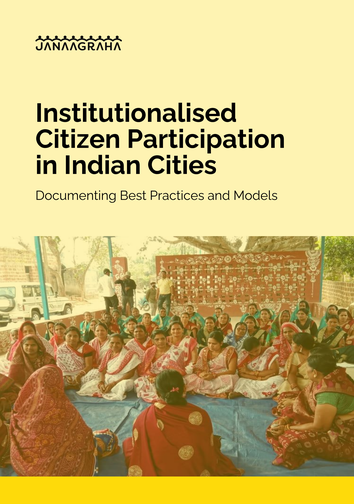
Institutionalised Citizen Participation in Indian Cities: Documenting Best Practices and Models examines what makes citizen participation work and how it can become a regular part of urban governance. Drawing on 12 city and state cases, the research documents participatory platforms operating at the city, ward and sub-ward levels, and traces the institutional conditions that enable them to function effectively. It finds that meaningful participation depends on clear legal mandates, inclusive representation, structured processes, citizen influence and accountability, supported by collaboration, capacity building and appropriate use of technology.
The research identifies pathways through which citizen participation can move from community action to sustained institutional practice. It sets out roles for Union and State Governments, Urban Local Governments, civil society organisations and other partners to strengthen participatory platforms through clear rules, dedicated capacity, regular processes, public records and stronger links between citizen inputs, plans and budgets. The central argument is that the foundation for participation already exists; the next step is to make it part of how cities routinely govern.